
Introduction
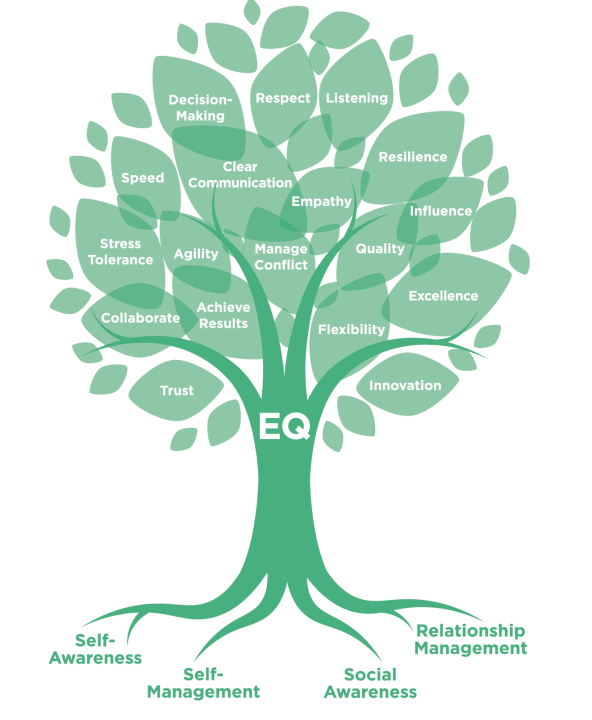
In today’s rapidly evolving and interconnected world, leadership has taken on a new dimension. While traditional measures of intelligence (IQ) and technical skills remain important, they are no longer sufficient for navigating the complex challenges of the modern workplace. Emotional intelligence (EQ), the ability to understand, use, and manage emotions in oneself and others, has emerged as a critical factor in determining leadership success. The image accompanying this article serves as a powerful metaphor for the interconnectedness of EQ and effective leadership, highlighting its four core components: self-awareness, self-management, social awareness, and relationship management. In this comprehensive exploration of EQ, we will delve into its significance, components, benefits, development strategies, and implications for organizations and individuals alike.
Understanding Emotional Intelligence (EQ)
Emotional intelligence (EQ), often referred to as emotional quotient, is a multi-faceted concept that encompasses a wide range of skills and abilities related to understanding, using, and managing emotions effectively. While there are various models of EQ, the one popularized by psychologist Daniel Goleman identifies four key components:
- Self-Awareness: The ability to recognize and understand one’s own emotions, strengths, weaknesses, values, and motivations. It involves being attuned to how emotions impact thoughts and behaviors and recognizing how others perceive you.
- Self-Management: The ability to regulate one’s emotions, impulses, and behaviors in a constructive way. This includes managing stress, controlling impulses, adapting to change, and maintaining a positive outlook.
- Social Awareness: The ability to understand and empathize with the emotions, needs, and concerns of others. This involves being perceptive to social cues, understanding different perspectives, and demonstrating empathy.
- Relationship Management: The ability to build and maintain healthy relationships, communicate effectively, inspire and influence others, manage conflict, and collaborate effectively.
The Significance of EQ in Leadership
While technical skills and expertise are undoubtedly important for leadership, EQ has emerged as a critical factor in determining leadership effectiveness and success. Here’s why:

Subscribe to continue reading
Subscribe to get access to the rest of this post and other subscriber-only content.
 SkillWisor