
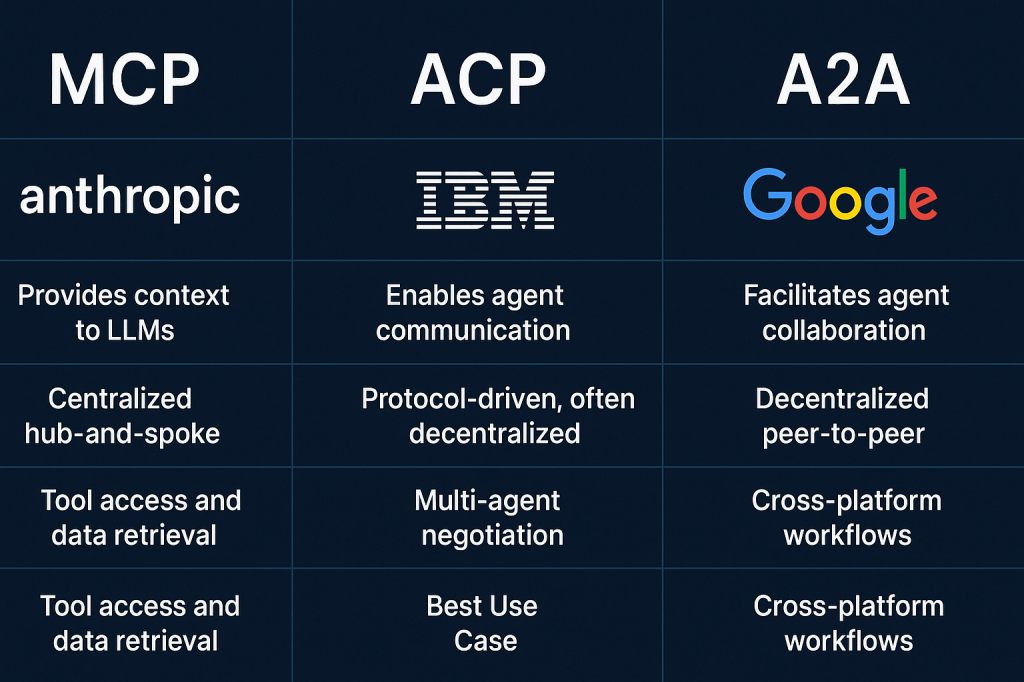
In the rapidly evolving landscape of artificial intelligence, we’re witnessing a transformation comparable to the early days of personal computing. Remember when every device needed a unique connector before USB standardized connectivity? Today’s AI ecosystem faces a similar challenge: how do we enable seamless communication across different AI platforms, models, and architectures? Three groundbreaking protocols—Model Context Protocol (MCP), Agent Communication Protocol (ACP), and Agent-to-Agent Protocol (A2A)—are emerging as the solution to this critical challenge.
The Fragmentation Crisis in Modern AI
The current state of AI resembles pre-USB computing chaos. Organizations pour millions into custom integration efforts, with each AI model or data source requiring bespoke connections. This fragmentation creates four major challenges:
- Custom code requirements for each new model or data source
- Limited interoperability between different AI systems
- Complex security and permission management
- Inefficient collaboration between autonomous agents
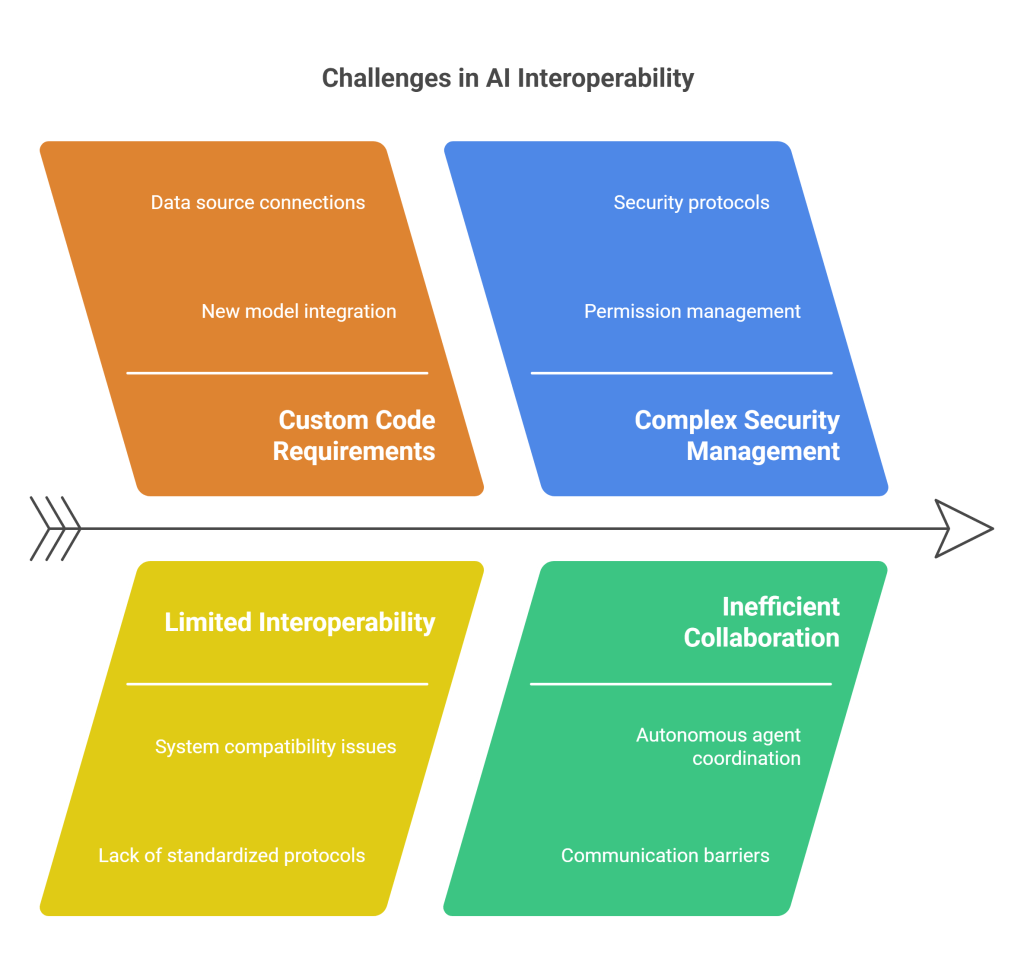
The emergence of MCP, ACP, and A2A represents a coordinated industry response to solve these issues, promising to do for AI what USB achieved for hardware connectivity.
Understanding the Three Protocol Titans
Model Context Protocol (MCP): The Context Layer
Developed by Anthropic, MCP functions as a “USB-C port for AI applications”—a standardized method for connecting AI applications with data sources, tools, and services. Think of it as the foundational layer that ensures AI models have access to the right context at the right time.
Core Features:
- Architecture: Client-server model with MCP Hosts, Clients, and lightweight Server modules
- Functionality: Standardizes how applications provide context to LLMs, using JSON-RPC 2.0 for message exchange
- Security: Multi-layered approach requiring explicit user consent, data privacy controls, and tool safety measures
- Real-world Impact: Companies like Block (Square), Apollo, Zed, Replit, and Sourcegraph have adopted MCP for seamless AI integration in code assistance, healthcare data access, and document processing
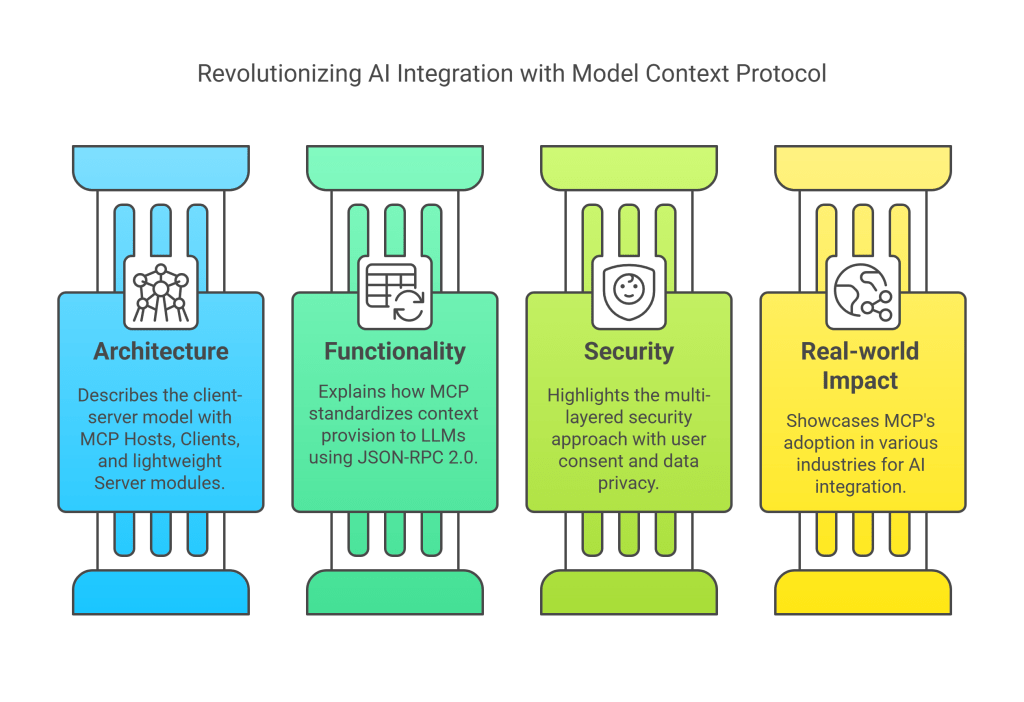
MCP excels at providing LLMs with structured access to external resources like databases, APIs, and local files, enhancing their ability to generate relevant, context-aware responses.
Agent Communication Protocol (ACP): The Negotiation Layer
Born from IBM’s BeeAI project, ACP extends MCP’s principles to enable sophisticated communication between AI agents. While MCP focuses on model-to-tool connections, ACP establishes the language and protocols for agent-to-agent interactions.
Core Features:
- Performative Messages: Standardized message types (request, inform, propose) for structured communication
- Flexible Architecture: Supports both stateful and stateless agents with JSON-RPC based communication
- Natural Language Processing: Handles ambiguous inputs and enables intuitive agent interactions
- Enterprise Integration: Compatible with legacy systems and microservices architectures
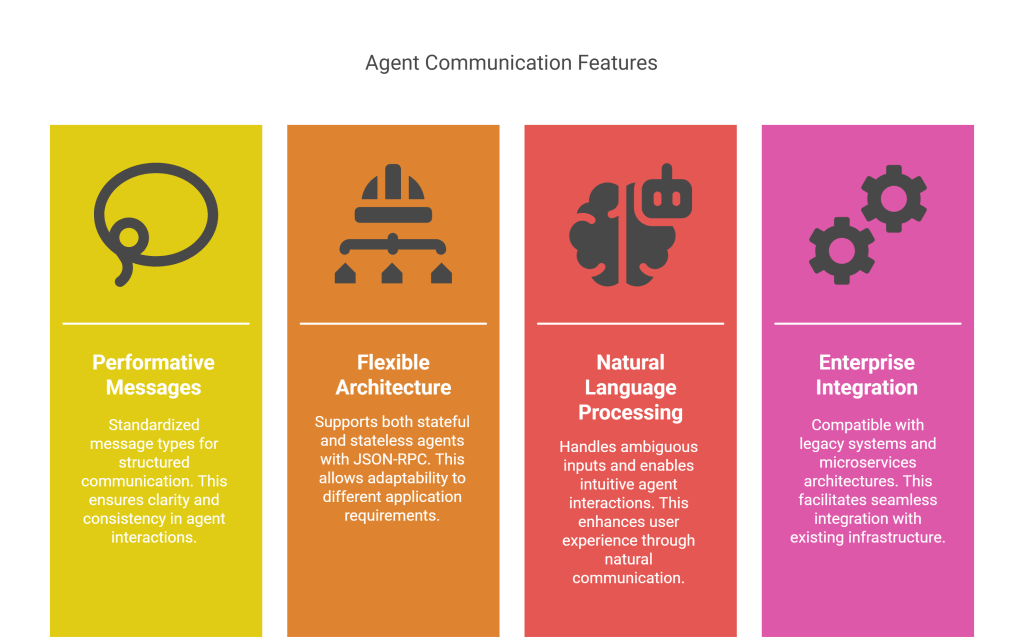
ACP addresses unique challenges not covered by MCP, including real-time streaming capabilities, flexible agent design, and seamless integration with existing enterprise systems.
Agent-to-Agent Protocol (A2A): The Collaboration Layer

Subscribe to continue reading
Subscribe to get access to the rest of this post and other subscriber-only content.
 SkillWisor