
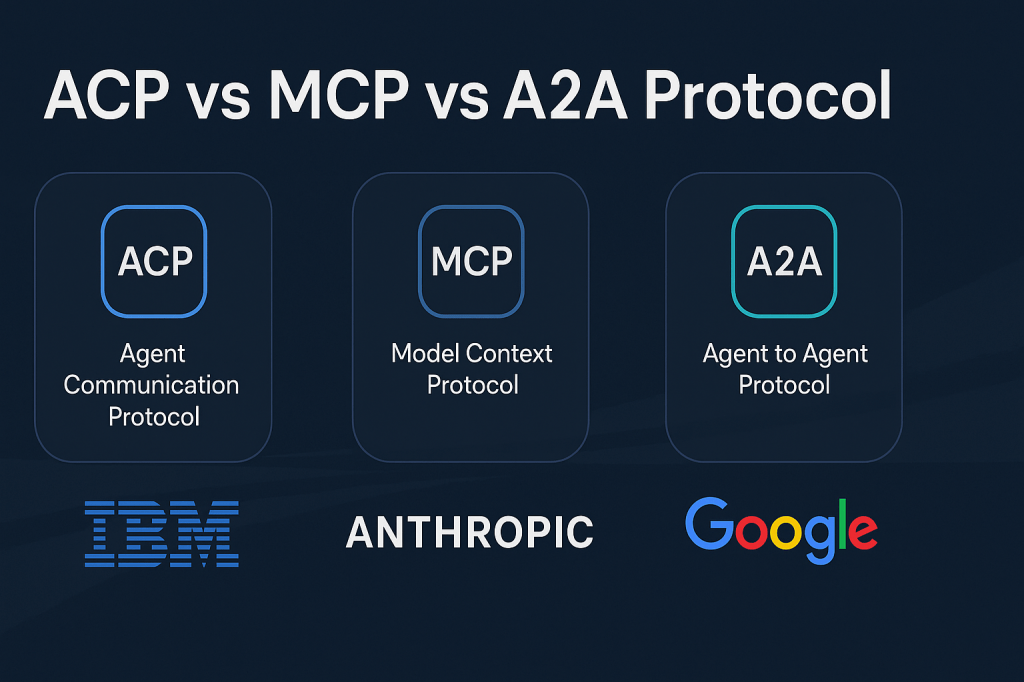
As artificial intelligence matures into the backbone of modern enterprise, a fundamental challenge remains: how do we enable AI agents to communicate seamlessly across platforms, organizations, and architectures? Three groundbreaking protocols – Model Context Protocol (MCP), Agent-to-Agent Protocol (A2A), and Agent Communication Protocol (ACP) – are emerging as the solutions to this challenge, each addressing critical aspects of AI interoperability.
The Fragmentation Crisis: Why AI Desperately Needs Communication Standards
Today’s AI landscape resembles the early days of personal computing – before USB, before Ethernet, when every device required custom connectors and proprietary protocols. This fragmentation is costing enterprises millions in integration efforts and limiting the potential of autonomous AI systems. The emergence of MCP, A2A, and ACP represents a coordinated industry response to this crisis, promising to do for AI what USB did for hardware connections.
Three Protocols, Three Critical Functions
1. Model Context Protocol (MCP): The Context Layer
Developed by Anthropic, MCP standardizes how contextual information flows into AI models, acting as a structured pipeline for chat history, user data, and external resources. Its primary focus is enhancing the relevance and capability of large language models through rich, structured context.
Architecture and Core Components:
- MCP Host: LLM-powered programs that access data resources and perform inference
- MCP Client: Manages 1:1 server connections, bridging user applications and models
- MCP Server: Lightweight modules exposing capabilities via standardized interfaces

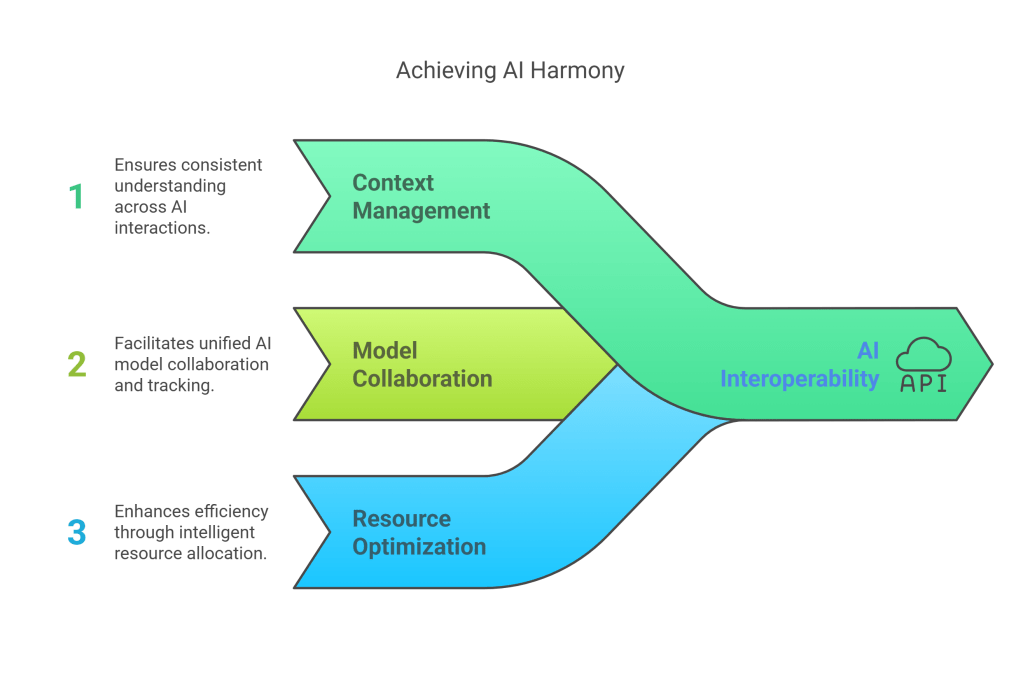
Core Features:
- Context Management: Version control and semantic associations
- Model Collaboration: Unified interface and inference chain tracking
- Resource Optimization: Intelligent caching and incremental updates
Transport and Security:
- Transport layer options: stdio (local), SSE (real-time remote), custom protocols
- Security options: API Keys, OAuth 2.1 with PKCE, Dynamic Client Registration
Real-world Impact: MCP enables LLMs to seamlessly access external APIs and databases during inference, revolutionizing tool-augmented reasoning.
2. Agent-to-Agent Protocol (A2A): The Collaboration Layer
Led by Google with major partners like Salesforce, SAP, and LangChain, A2A enables truly interoperable autonomous AI agents. It provides a decentralized framework for agents to discover, negotiate, and collaborate across organizational boundaries.
Architecture and Core Components:
- Tasks: Request objects tracking their lifecycle
- Artifacts: Structured outputs from agent tasks
- Messages: Communication units exchanged between agents
- Parts: Multi-format content support (text, JSON, images)

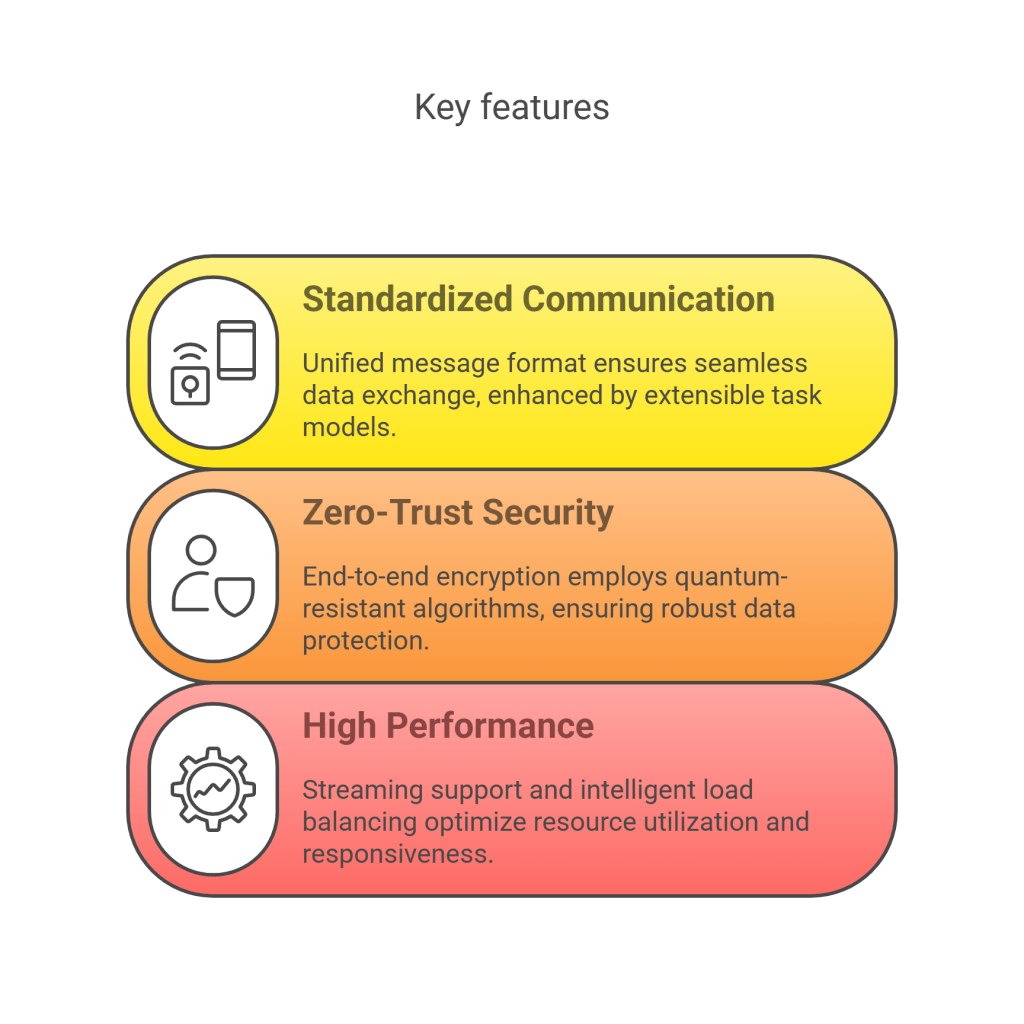
Core Features:
- Standardized Communication: Unified message format with extensible task models
- Zero-Trust Security: End-to-end encryption with quantum-resistant algorithms
- High Performance: Streaming support and intelligent load balancing
Transport and Security:
- Primary transport: JSON-RPC 2.0 over HTTPS
- Real-time support: Server-Sent Events and push notifications
- Security: Context-aware permissions with OAuth 2.0 and OpenID Connect
Real-world Impact: A2A powers distributed agent networks for applications like smart city management and cross-organizational healthcare diagnostics.
3. Agent Communication Protocol (ACP): The Negotiation Layer
Born from IBM’s BeeAI project, ACP provides the foundational language for structured agent communication. While less defined in recent implementations, ACP establishes standards for how agents negotiate, coordinate, and collaborate.

Subscribe to continue reading
Subscribe to get access to the rest of this post and other subscriber-only content.
 SkillWisor