
Landing a job interview is a significant achievement. It means your resume and initial application successfully highlighted your potential. But the interview itself is where the real magic – and sometimes the real anxiety – happens.

As a recruiter, I’ve sat on the other side of the table (or screen) countless times. I’ve asked the questions, listened to the answers, and made decisions that impact careers. And I can tell you this: the most successful candidates aren’t necessarily the ones with the flashiest resumes or the most technical jargon. They are the ones who understand the purpose behind the questions and tailor their responses to demonstrate not just their skills, but their fit, potential, and genuine interest.
Interview questions aren’t random hurdles designed to trip you up. They are carefully crafted probes designed to uncover specific information about your experience, skills, personality, work style, and motivations. They help us predict how you’ll perform in the role, how you’ll fit into the team culture, and whether you’ll be a valuable long-term asset to the company..
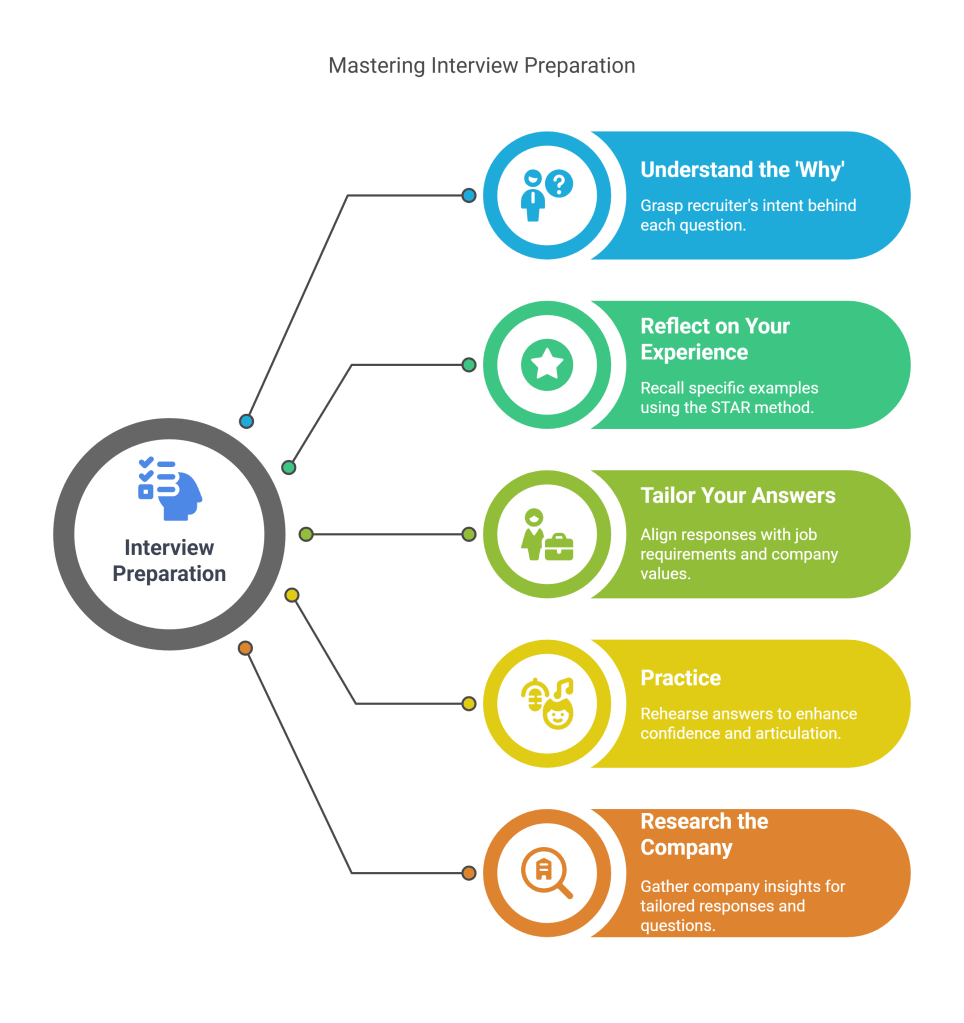
In this guide, I’m going to pull back the curtain and reveal what recruiters are really thinking when they ask those common questions. Understanding the ‘why’ behind the ‘what’ will empower you to move beyond generic answers and provide responses that truly resonate and set you apart.
Let’s dive into the most frequently asked interview questions and decode their true meaning from a recruiter’s perspective.
1. “Tell me about yourself.”
What the Recruiter Actually Wants to Know: This isn’t an invitation to recite your life story or read your resume verbatim. We’ve already seen your resume. What we’re looking for is a concise, compelling summary of your professional journey, highlighting the most relevant experiences and skills that align with the job you’re interviewing for. We want to understand your career trajectory, your key qualifications, and why this role is a logical next step for you. It’s your elevator pitch – make it count.
How to Answer Effectively: Start with your present, briefly touch upon your past (relevant experience), and transition to your future (why you’re interested in this role). Focus on 2-3 key achievements or skills that are directly applicable to the job description. Practice a 60-90 second summary that is enthusiastic and clearly connects your background to the opportunity.
2. “Why are you interested in this role and our company?”
What the Recruiter Actually Wants to Know: This question measures your motivation, research skills, and genuine interest. We want to see that you’ve done your homework about the company, its mission, values, products/services, and recent news. More importantly, we want to understand why this specific role excites you and how it fits into your career goals. A generic answer here signals a lack of genuine interest or effort.
How to Answer Effectively: Combine your research about the company (mention something specific you admire or find interesting) with your personal career aspirations. Explain how the role’s responsibilities align with your skills and interests, and how you see yourself contributing to the company’s success. Be specific and enthusiastic.
3. “What are your greatest strengths?”
What the Recruiter Actually Wants to Know: We want to identify your key skills and positive attributes, but we also want to see if you understand what strengths are most valuable for this particular role. It’s not enough to list generic strengths; you need to provide context and evidence. We’re looking for self-awareness and the ability to articulate how your strengths translate into success in a professional setting.
How to Answer Effectively: Choose 2-3 strengths that are highly relevant to the job description. For each strength, provide a brief, specific example (using the STAR method – Situation, Task, Action, Result) that demonstrates how you’ve successfully applied this strength in the past. Quantify results whenever possible.
4. “What do you consider your weaknesses?”
What the Recruiter Actually Wants to Know: This is a test of self-awareness, honesty, and your ability to identify areas for improvement and take steps to address them. We don’t expect you to be perfect. We want to see that you can honestly assess yourself and are proactive about personal and professional development. Avoid clichés like “I’m a perfectionist” unless you can genuinely articulate the negative impact and your concrete steps to manage it.
How to Answer Effectively: Choose a genuine weakness that is not a core requirement for the job. Frame it constructively. Explain what the weakness is, provide a brief example if appropriate, and most importantly, describe the specific steps you are taking to overcome or manage it. This demonstrates your commitment to growth.
5. “Where do you see yourself in 5 years?”
What the Recruiter Actually Wants to Know: This question helps us gauge your ambition, career goals, and whether your aspirations align with the opportunities within our company. We want to see that you’ve thought about your future and that you are likely to stay and grow with the organization, rather than using this role as a short-term stepping stone (unless the role is explicitly temporary). We’re also assessing your understanding of potential career paths in this field or within the company.
How to Answer Effectively: Be realistic and tie your answer back to the role and company. Express your desire to grow and take on more responsibility within the organization. Talk about developing your skills, becoming an expert in your field, or potentially moving into a leadership role within this company. Show that you see a future here.
6. “Why are you leaving your current job?” (Or “Why did you leave your last job?”)
What the Recruiter Actually Wants to Know: We want to understand your motivations for seeking a new opportunity and identify any potential red flags. Are you leaving on good terms? Are you running from something or running towards something? We’re looking for professionalism, honesty, and a focus on positive reasons for moving on (e.g., seeking growth, new challenges, better alignment with career goals, company restructuring). Avoid bad-mouthing previous employers, managers, or colleagues at all costs.
How to Answer Effectively: Be honest but diplomatic and positive. Focus on what you are seeking in a new role or company that your current/previous one couldn’t provide. Frame it in terms of career growth, new challenges, a desire to work in a different industry or company culture, or a better opportunity that aligns with your long-term goals. Keep it brief and professional.
7. “Describe a challenging situation you faced at work and how you overcame it.”
What the Recruiter Actually Wants to Know: This is a behavioral question designed to assess your problem-solving skills, resilience, critical thinking, and ability to navigate difficult circumstances. We want to hear about a real situation, understand your thought process, the actions you took, and the outcome. It reveals how you react under pressure and your approach to overcoming obstacles.
How to Answer Effectively: Use the STAR method:
- Situation: Briefly describe the context of the challenging situation.
- Task: Explain your role and what you needed to achieve.
- Action: Detail the specific steps you took to address the challenge. Focus on your actions, not just the team’s.
- Result: Describe the outcome of your actions. Ideally, it was a positive resolution or a valuable lesson learned. Quantify the results if possible.
8. “Describe a time you failed or made a mistake and what you learned from it.”
What the Recruiter Actually Wants to Know: Similar to the weakness question, this assesses your self-awareness, honesty, humility, and ability to learn from setbacks. Everyone makes mistakes; what matters is how you handle them and what you take away from the experience. We want to see that you can own your mistakes, analyze what went wrong, and apply those lessons to future situations.
How to Answer Effectively: Choose a genuine, but not catastrophic, failure or mistake. Use the STAR method. Describe the situation and your role. Explain the mistake. Crucially, focus the majority of your answer on what you learned from the experience and how you have applied that learning since. This demonstrates growth and resilience.
9. “How do you handle pressure or stress?”
What the Recruiter Actually Wants to Know: Most jobs involve some level of pressure or stress. We want to understand your coping mechanisms and whether you can remain effective and professional when deadlines are tight or unexpected issues arise. We’re looking for healthy, productive ways of managing stress, not avoidance or negative reactions.
How to Answer Effectively: Acknowledge that pressure is a normal part of work. Describe your strategies for managing it, such as prioritizing tasks, breaking down large projects, staying organized, communicating effectively, taking short breaks, or focusing on the end goal. Provide a brief example of a time you successfully managed a stressful situation.
10. “How do you prioritize tasks when you have multiple deadlines?”
What the Recruiter Actually Wants to Know: This assesses your organizational skills, time management, and ability to make sound judgments about competing demands. We want to understand your system for managing workload, ensuring important tasks are completed on time, and adapting when priorities shift.
How to Answer Effectively: Describe your process for prioritizing. This might involve creating to-do lists, using project management tools, assessing urgency and importance, communicating with stakeholders about timelines, or breaking down large tasks. Provide a specific example of a time you successfully managed multiple competing priorities.
11. “How do you work in a team?”
What the Recruiter Actually Wants to Know: Collaboration is essential in most modern workplaces. We want to understand your approach to teamwork, your ability to contribute effectively, communicate clearly, support colleagues, and handle disagreements constructively. We’re looking for a team player who understands the value of collective effort.
How to Answer Effectively: Talk about your positive experiences working as part of a team. Highlight your ability to communicate, listen, contribute ideas, support team goals, and handle different personalities. Provide an example of a successful team project where you played a key role and contributed to the collective outcome.
12. “Describe a conflict you had with a colleague and how you resolved it.”
What the Recruiter Actually Wants to Know: Conflict is inevitable in any workplace. This question assesses your interpersonal skills, ability to handle disagreements professionally, communication skills, and your approach to finding mutually agreeable solutions. We want to see that you can address conflict constructively, rather than avoiding it or escalating it negatively.
How to Answer Effectively: Choose a relatively minor conflict that had a positive resolution. Use the STAR method. Describe the situation and the nature of the conflict. Explain your approach to resolving it (e.g., open communication, active listening, seeking to understand the other person’s perspective, focusing on the issue, not the person). Describe the resolution and what you learned about managing conflict. Avoid blaming the other person entirely.
13. “How do you handle feedback, especially constructive criticism?”
What the Recruiter Actually Wants to Know: This assesses your openness to learning, your humility, and your ability to receive and act upon feedback for improvement. In a dynamic work environment, being receptive to feedback is crucial for growth and performance. We want to see that you view feedback as an opportunity to develop, not a personal attack.
How to Answer Effectively: Express your appreciation for feedback as a tool for growth. Describe your process for receiving feedback (listening actively, asking clarifying questions). Explain how you process feedback and take steps to implement changes or improvements based on it. Provide an example of a time you received constructive criticism and how you used it to improve your performance or approach.
14. “What are your salary expectations?”
What the Recruiter Actually Wants to Know: This is a crucial question for determining if there’s alignment between your expectations and the company’s budget for the role. We want to understand your value proposition and ensure we’re in the same ballpark early in the process to avoid wasting time on either side. It also shows whether you’ve researched typical salaries for similar roles in your location and industry.
How to Answer Effectively: Be prepared by researching salary ranges for similar roles in your geographic area and industry (websites like Glassdoor, LinkedIn Salary, Payscale can help). Provide a salary range rather than a single number. You can state that your expectations are in line with industry standards for a role like this, considering your experience. If possible, try to defer the question until later in the process after you’ve learned more about the full compensation package (salary, bonus, benefits, etc.), but be prepared to provide a range if pressed. You can say something like, “Based on my research and experience, I’m looking for a salary in the range of [Your Range]. However, I’m also very interested in the overall compensation package and the opportunity itself.”
15. “Do you have any questions for me?”
What the Recruiter Actually Wants to Know: This is one of the most important questions you’ll be asked! It demonstrates your engagement, interest, and whether you’ve thought critically about the role and company. Asking thoughtful, insightful questions shows that you are genuinely considering this opportunity and are proactive in gathering information. Not asking questions, or asking questions whose answers are easily found on the company website, can signal a lack of interest or preparation.
How to Answer Effectively: ALWAYS have questions prepared. Prepare 3-5 thoughtful questions in advance. Avoid questions about salary, benefits, or time off during the initial interview stages (unless the interviewer brings it up or asks for your expectations). Focus on questions about the role’s responsibilities, team dynamics, company culture, opportunities for growth, challenges in the role, or how success is measured. This shows you’re thinking about the practicalities of the job and your potential impact.
16. “Why should we hire you?”
What the Recruiter Actually Wants to Know: This is your chance to summarize your value proposition and directly connect your skills and experience to the needs of the role and company. We want a concise, compelling pitch that highlights your unique selling points and explains how you will add value. Think of this as the culmination of your interview – why are you the best candidate?
How to Answer Effectively: Reiterate your key strengths and relevant experience, specifically linking them to the requirements outlined in the job description. Briefly mention your enthusiasm for the role and company. Confidently articulate how you will solve their problems, contribute to their goals, and be a positive addition to the team. Be specific and confident.
17. “Describe a project you’re most proud of.”
What the Recruiter Actually Wants to Know: This behavioral question allows you to showcase a significant accomplishment and provides insight into the type of work you find fulfilling and where you excel. We want to understand the scope of the project, your specific contributions, the challenges you faced, how you overcame them, and the positive outcome. It highlights your skills, initiative, and ability to deliver results.
How to Answer Effectively: Choose a project that is relevant to the type of work you’d be doing in the new role. Use the STAR method to describe the project. Focus on your specific actions and contributions, not just the team’s. Quantify the results or impact of the project whenever possible. Explain why you are proud of it – what made it particularly challenging or rewarding?
18. “How do you stay updated in your field?”
What the Recruiter Actually Wants to Know: This assesses your commitment to continuous learning and professional development. In fast-paced industries, staying current with trends, technologies, and best practices is essential. We want to see that you are proactive in expanding your knowledge and skills.
How to Answer Effectively: Describe the specific ways you stay informed – reading industry publications, following thought leaders on social media, attending webinars or conferences, taking online courses, participating in professional organizations, or engaging in personal projects. Be specific about the resources you use.
19. “Describe your ideal work environment.”
What the Recruiter Actually Wants to Know: This helps us gauge your cultural fit within the organization. We want to understand the type of environment where you thrive and ensure it aligns with our company culture. Are you looking for a fast-paced, collaborative environment, or something more structured and independent?
How to Answer Effectively: Describe an environment where you are most productive and engaged. Focus on positive aspects like collaboration, clear communication, opportunities for growth, supportive colleagues, or a focus on innovation. Try to align your description with what you know (or have researched) about the company’s culture. Avoid describing an environment that is the opposite of what the company offers.
20. “How do you measure success?”
What the Recruiter Actually Wants to Know: This question reveals your values, priorities, and what motivates you professionally. Do you measure success by personal achievement, team accomplishments, impact on the company, learning and growth, or something else? We want to see that your definition of success aligns with the goals of the role and the company.
How to Answer Effectively: Connect your definition of success to tangible outcomes and positive impact. This could include achieving specific goals, contributing to team success, exceeding expectations, developing new skills, or making a positive difference for customers or colleagues. Provide an example of a time you felt successful and explain why.
21. “What motivates you?”
What the Recruiter Actually Wants to Know: This question helps us understand what drives your performance and engagement. Are you motivated by challenging problems, opportunities for learning, making an impact, recognition, teamwork, or something else? Understanding your motivators helps us assess if the role and company can provide what you need to be happy and productive.
How to Answer Effectively: Be genuine about what truly motivates you professionally. Connect your motivators to aspects of the job or company culture. For example, if you’re motivated by solving complex problems, explain how the challenges in this role excite you. If you’re motivated by teamwork, talk about your desire to collaborate with the team.
22. “How do you handle change or ambiguity?”
What the Recruiter Actually Wants to Know: In today’s dynamic business world, change is constant. We want to see that you are adaptable, flexible, and comfortable navigating uncertainty. Your ability to embrace change and remain productive in ambiguous situations is a valuable asset.
How to Answer Effectively: Acknowledge that change is a normal part of work. Describe your approach to handling change – staying calm, focusing on what you can control, seeking clarification, being open to new ideas, or helping others adapt. Provide a brief example of a time you successfully navigated a period of change or ambiguity.
23. “What are your hobbies or interests outside of work?”
What the Recruiter Actually Wants to Know: While seemingly unrelated to the job, this question helps us get a sense of your personality, work-life balance, and whether you are a well-rounded individual who might fit in with the company culture on a personal level. It can also reveal transferable skills like teamwork (if you play sports), discipline (if you train for marathons), or creativity (if you pursue artistic hobbies).
How to Answer Effectively: Be honest and enthusiastic. Share a few genuine hobbies or interests that you are passionate about. You can briefly mention any transferable skills you gain from these activities, but don’t force a connection if it’s not natural. This is an opportunity to show your personality.
24. Technical/Situational Questions (Specific to the Role)
What the Recruiter Actually Wants to Know: These questions are designed to assess your specific skills, knowledge, and ability to apply them to real-world scenarios relevant to the job. For technical roles, this might involve coding challenges, system design questions, or explaining technical concepts. For other roles, it could be case studies or questions about how you would handle specific situations you might encounter. We want to see your thought process, problem-solving approach, and depth of knowledge.
How to Answer Effectively: Listen carefully to the question. If it’s a technical question, explain your thought process as you work towards a solution. If it’s a situational question, use a modified STAR method or a similar structured approach to describe how you would handle the scenario, focusing on your reasoning and actions. Don’t be afraid to ask clarifying questions if needed. If you don’t know the answer, be honest but explain how you would go about finding the information or solving the problem.
25. “What are your salary expectations?” (Revisited)
What the Recruiter Actually Wants to Know: As mentioned earlier, this is about alignment. However, sometimes this question comes later in the process. At this stage, it’s also about understanding if you feel your skills and the value you bring justify a certain compensation level.
How to Answer Effectively: By this stage, you should have a clearer understanding of the role’s responsibilities and the company’s compensation philosophy. Reiterate your researched salary range. You can also mention that you are open to discussing the full compensation package, including benefits, bonus potential, and opportunities for growth, as these also contribute to the overall value of the offer.
26. “What are your long-term career goals?”
What the Recruiter Actually Wants to Know: Similar to the “5 years” question, this explores your ambition and whether your long-term vision aligns with potential career paths within the company. We want to see that you are forward-thinking and have a sense of direction.
How to Answer Effectively: Discuss your aspirations in broad terms, focusing on areas like becoming an expert, taking on leadership roles, mentoring others, or contributing to significant projects. Connect your long-term goals to the opportunities you believe this company could offer you.
27. “What kind of supervision do you prefer?”
What the Recruiter Actually Wants to Know: This helps us understand your preferred working style and how you interact with managers. Do you thrive with close guidance, or are you more independent? This helps assess the potential fit with the hiring manager’s leadership style.
How to Answer Effectively: Be adaptable. You can say you are comfortable with various styles but thrive with clear communication, regular check-ins, and constructive feedback. Emphasize your ability to work independently while also knowing when to ask for help or clarification.
28. “How do you stay organized?”
What the Recruiter Actually Wants to Know: This assesses your ability to manage your workload, meet deadlines, and keep track of tasks. It’s about efficiency and reliability.
How to Answer Effectively: Describe your specific methods for staying organized, such as using calendars, to-do lists, project management tools, or specific organizational systems. Provide a brief example of how your organizational skills have helped you succeed.
29. “Describe a time you had to work with a difficult person.”
What the Recruiter Actually Wants to Know: Similar to the conflict question, this explores your interpersonal skills and ability to maintain professionalism when dealing with challenging personalities. We want to see that you can navigate difficult relationships constructively.
How to Answer Effectively: Choose a situation where you remained professional and focused on the work or the desired outcome, rather than getting bogged down in personality clashes. Describe your approach to communicating and collaborating with the individual to achieve a common goal. Focus on the strategies you used, not on criticizing the other person.
30. “What are you passionate about?”
What the Recruiter Actually Wants to Know: This question aims to uncover what truly excites and drives you, both professionally and personally. Passion often translates into motivation, dedication, and a willingness to go the extra mile. We want to see your enthusiasm and what makes you tick.
How to Answer Effectively: Share something you are genuinely passionate about. Ideally, connect it to your professional interests or the industry, but it can also be a personal passion that reveals positive traits like creativity, perseverance, or a desire to learn. Let your enthusiasm show.
31. “How do you handle ambiguity or situations where there isn’t a clear answer?”
What the Recruiter Actually Wants to Know: This is similar to the change question but focuses more on problem-solving in uncertain conditions. We want to see that you are comfortable with complexity, can think critically, gather information, and make reasoned decisions even when all the facts aren’t available.
How to Answer Effectively: Describe your approach to tackling ambiguous problems – breaking them down, gathering available information, making educated assumptions, seeking input from others, and being comfortable with iteration. Provide an example of a time you successfully navigated an ambiguous situation.
32. “What are your hobbies?” (Revisited)
What the Recruiter Actually Wants to Know: As mentioned before, this is about personality and fit. It’s a chance to show you’re a human being with interests outside of work, which can contribute to a positive team dynamic.
How to Answer Effectively: Be authentic. Share hobbies that you genuinely enjoy. It’s okay if they aren’t directly related to the job, as long as they don’t raise red flags (e.g., excessive risk-taking). This is a chance to build rapport.
33. “What are your thoughts on [Industry Trend/Recent Event]?”
What the Recruiter Actually Wants to Know: This assesses your awareness of the industry landscape, your critical thinking skills, and your ability to form informed opinions. It shows whether you are engaged with the broader context of your field.
How to Answer Effectively: Demonstrate that you are aware of the trend or event. Provide a concise summary of what it is and offer a thoughtful perspective on its potential impact on the industry, the company, or your role. It’s okay to acknowledge complexity or different viewpoints.
34. “How do you prioritize diversity and inclusion in the workplace?”
What the Recruiter Actually Wants to Know: Many companies prioritize creating diverse and inclusive environments. This question assesses your understanding of D&I principles and your commitment to contributing to a workplace where everyone feels valued and respected.
How to Answer Effectively: Express your belief in the importance of diversity and inclusion. Talk about how you actively work to create an inclusive environment, such as being open to different perspectives, treating everyone with respect, speaking up against bias, or participating in D&I initiatives if you have.
35. “What are your professional development goals?”
What the Recruiter Actually Wants to Know: This is similar to the long-term goals question but focuses specifically on your plans for learning and skill development. We want to see that you are committed to continuous improvement and have a plan for acquiring new knowledge and skills.
How to Answer Effectively: Discuss specific skills or areas of knowledge you want to develop. Relate these goals to your career aspirations and how they would make you more effective in the role you’re interviewing for. This shows initiative and a desire to grow within the company.
The Underlying Theme: Fit and Future
As you can see, while the questions vary, many of them are designed to uncover two key things:
- Fit: Do your skills, experience, work style, and personality align with the requirements of the role, the team, and the company culture?
- Future: Are you motivated to succeed in this role, grow within the company, and become a valuable long-term employee?
By understanding these underlying goals, you can move beyond simply answering the question and instead craft responses that strategically demonstrate your suitability and potential.
Preparing for Success
Preparation is key. For each common question:
- Understand the ‘Why’: What is the recruiter really trying to learn?
- Reflect on Your Experience: Think of specific examples from your past that demonstrate the skills or qualities being asked about. Use the STAR method.
- Tailor Your Answers: Connect your responses back to the specific requirements of the job description and the company’s values.
- Practice: Rehearse your answers out loud. This will help you sound confident and articulate.
- Research the Company: The more you know about the company, the better you can tailor your responses and ask insightful questions.
Interviews can be nerve-wracking, but by understanding the recruiter’s perspective and preparing thoughtfully, you can approach them with confidence and increase your chances of success. Good luck!
Discover more from SkillWisor
Subscribe to get the latest posts sent to your email.
 SkillWisor