
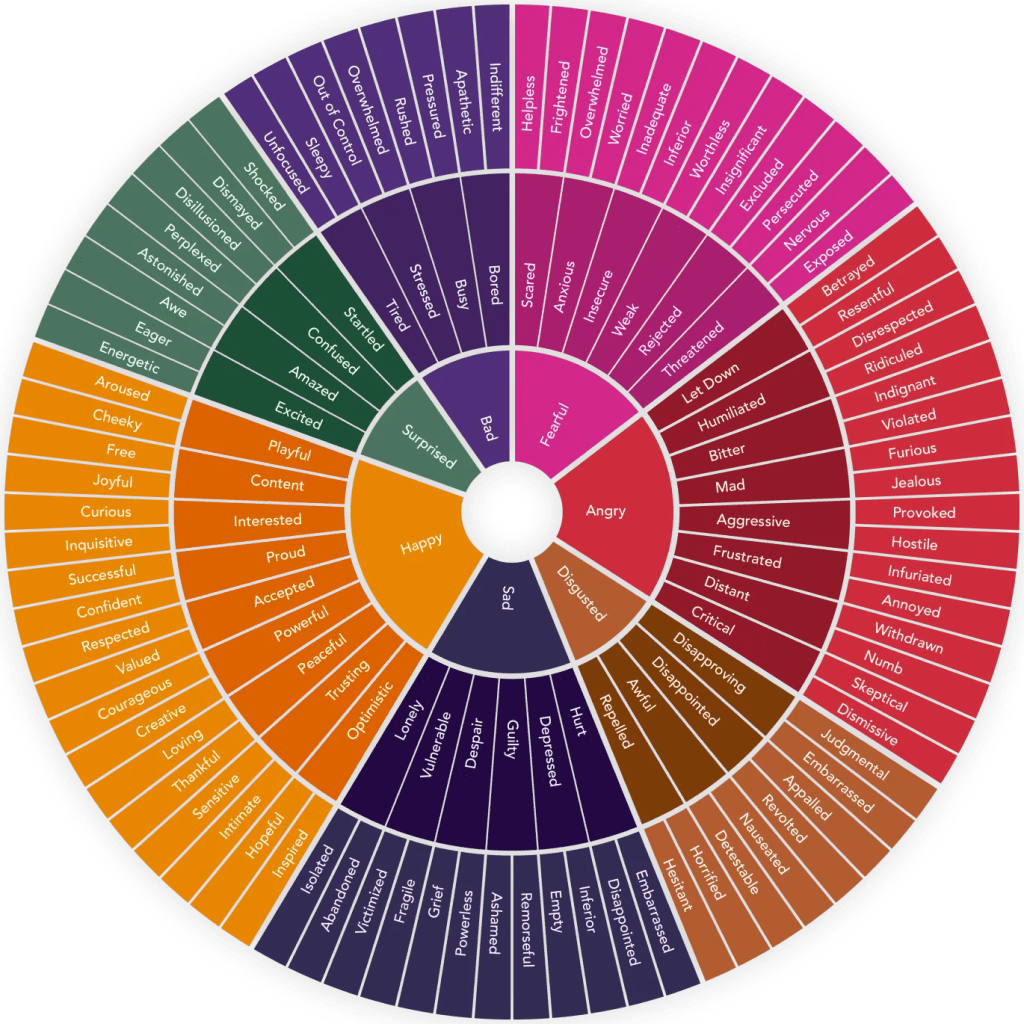
Human emotions are far more intricate than we often acknowledge. While we frequently categorize our feelings into basic states like happiness or sadness, our emotional landscape is actually a complex tapestry of overlapping experiences. What makes us distinctly human is not just our ability to feel emotions, but our capacity to experience nuanced blends that create unique emotional states that defy simple categorization.
Bittersweet: When Joy Meets Sadness
The bittersweet emotion emerges at the intersection of joy and sadness, creating one of the most profound human experiences. Think of watching your child graduate—joy in their accomplishment mixed with sadness as they move into a new phase of life. Or reminiscing about a departed loved one—finding happiness in memories while feeling the pang of their absence.
This emotional blend teaches us that happiness and sadness aren’t mutually exclusive but often complementary. The Japanese concept of “mono no aware” captures this sentiment perfectly—the awareness of impermanence that makes moments precious precisely because they don’t last. In literature, music, and film, bittersweet moments often create the most powerful emotional resonance because they reflect the fullness of human experience.
Many of life’s most significant transitions are marked by this emotional blend. The end of a meaningful chapter—whether graduating from college, leaving a beloved home, or completing a long-term project—naturally evokes both satisfaction in what’s been accomplished and nostalgia for what’s being left behind. This emotional complexity enriches our experience rather than diminishing it, allowing us to honor both the gains and losses that accompany change.
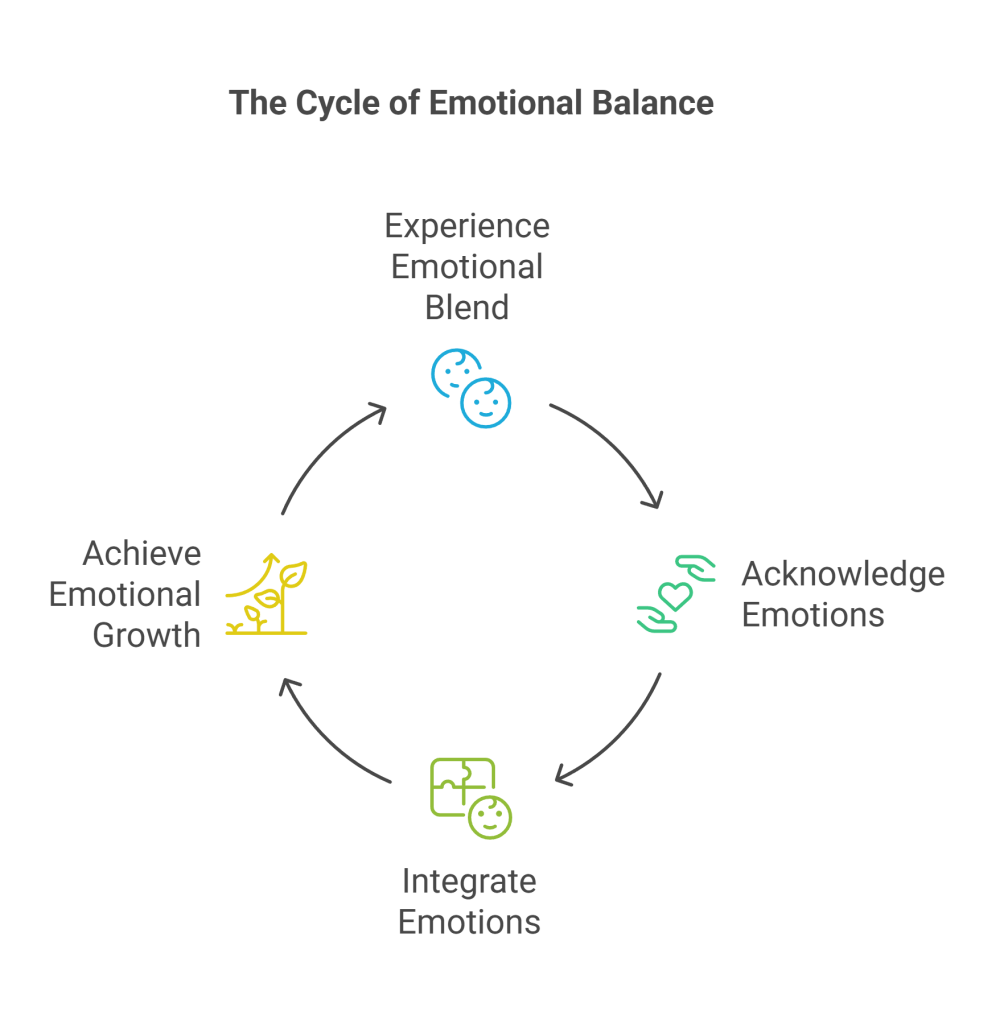
Psychologists suggest that experiencing bittersweet emotions might actually be essential for processing significant life transitions. By acknowledging both positive and negative aspects simultaneously, we integrate experiences more fully than if we limited ourselves to a single emotional framework. This integration contributes to wisdom and emotional maturity.
Anticipation: The Delicate Balance Between Anxiety and Excitement
Physiologically, anxiety and excitement are remarkably similar—both increase heart rate, trigger adrenaline release, and heighten alertness. What differs is largely our cognitive interpretation of these sensations. Anticipation emerges when we experience both simultaneously.
Consider waiting for an important job interview or the birth of a child. The uncertainty breeds anxiety, while possibility generates excitement. Research in cognitive psychology suggests that simple reframing can sometimes transform anxiety into excitement, showing how closely these emotions are linked.
Anticipation keeps us engaged with our futures, motivates preparation, and allows us to mentally rehearse upcoming events. It’s an evolutionary advantage that helps us navigate uncertain situations with both caution and openness.
The power of anticipation lies in its motivational quality. It propels us forward while keeping us vigilant. In creative pursuits, the anticipation of discovery drives exploration despite the anxiety of potential failure. In relationships, the anticipation of connection motivates vulnerability despite fears of rejection. This emotional blend serves as a critical bridge between present circumstances and future possibilities.
Cultural practices around anticipation—from advent calendars to wedding countdowns—highlight its importance in human experience. These traditions acknowledge and ritualize the mixed emotions that precede significant events, creating containers for both excitement and anxiety to coexist productively.
Assertiveness: Channeling Anger Through Compassion
Assertiveness represents a sophisticated emotional balance between anger and compassion. When we’re assertive, we honor our own boundaries and needs (the energy of anger) while remaining considerate of others (the awareness of compassion).
Without compassion, anger becomes destructive and alienating. Without appropriate anger, compassion can lead to self-neglect and boundary violations. True assertiveness draws strength from both—using the motivational force of anger while maintaining the connection that compassion provides.
Psychologists note that developing assertiveness is critical for healthy relationships. It allows us to advocate for ourselves without damaging connections and to resolve conflicts productively rather than explosively or passively.
This emotional balance appears in effective activism, where righteous anger about injustice combines with compassionate understanding of complex systems and human motivations. It manifests in therapeutic relationships, where therapists must compassionately confront unhealthy patterns. And it emerges in parenting, where establishing boundaries requires firmness tempered by deep care.
Training in assertiveness often involves developing awareness of both these emotional components—learning to recognize and channel anger constructively while maintaining empathic connection. This integration creates communication that’s both authentic and relationship-preserving.
Caution: Where Fear and Curiosity Converge
The blend of fear and curiosity creates caution—an essential emotional state for navigating new territory. Caution allows us to explore unknown situations while maintaining appropriate vigilance.
Young children naturally exhibit this blend when encountering novel situations—approaching with interest while remaining ready to retreat if necessary. This emotional state enables learning and growth while managing risk. It’s what allows us to step outside our comfort zones without being reckless.
Throughout human history, caution has enabled exploration and innovation. Without fear, curiosity could lead us into danger; without curiosity, fear would keep us stagnant. The integration creates a balanced approach to discovery.
This emotional blend has been essential to scientific advancement. Researchers pursuing breakthrough discoveries must balance curiosity about the unknown with appropriate protocols that acknowledge potential risks. Medical progress, space exploration, and technological innovation all depend on this careful integration of seemingly opposite emotional drives.
In personal development, cautious exploration often characterizes the most sustainable growth. Whether learning new skills, entering new relationships, or considering career changes, the capacity to remain curious while honoring legitimate concerns enables progress without unnecessary harm.
Realization: The Moment When Confusion Yields to Clarity
The journey from confusion to clarity produces moments of realization that can fundamentally alter our understanding. This “aha moment” occurs when the discomfort of not knowing transforms into the satisfaction of comprehension.
Neuroscience research shows that realizations create distinctive brain patterns—a sudden synchronization of neural activity that produces both cognitive and emotional responses. This explains why significant realizations often feel like both intellectual and emotional events.
Great scientific discoveries, personal insights in therapy, and creative breakthroughs all share this emotional signature. Confusion creates the necessary cognitive tension that makes clarity so rewarding when it arrives.
Educational psychologists recognize that productive confusion—the willingness to dwell in uncertainty while seeking understanding—predicts deeper learning outcomes. The emotional transition from confusion to clarity doesn’t just feel good; it appears to literally rewire neural pathways, creating more robust and accessible knowledge networks.
Some therapeutic approaches deliberately cultivate confusion as a pathway to new insights. By disrupting established patterns of thinking, therapists create space for clients to discover new perspectives. The emotional relief of clarity after confusion can provide motivation to maintain these hard-won insights.
Determination: Hope Tempered by Doubt
Determination emerges when hope and doubt exist simultaneously. Pure hope without doubt can lead to unrealistic optimism, while doubt without hope leads to pessimism or defeatism. The balanced state between them fuels perseverance.
This emotional blend acknowledges obstacles while maintaining belief in possibility. It’s what sustains marathon runners through “the wall,” entrepreneurs through business challenges, and activists through long social justice campaigns.
Psychologists studying resilience have found that determined individuals tend to have realistic assessments of difficulties alongside confident beliefs in their capacity to overcome them. This balanced perspective enables sustained effort in the face of challenges.
The quality of determination explains why some individuals persist where others abandon efforts. It’s not that determined people don’t experience doubt—rather, they maintain sufficient hope alongside their doubts to continue moving forward. This explains why determination often feels like a continuous internal dialogue rather than a static emotional state.
Research on “grit”—the capacity to maintain determination toward long-term goals—suggests that this emotional balance can be cultivated through practice. By intentionally holding both realistic assessment of challenges and confidence in eventual success, individuals develop greater persistence across various domains.
Skepticism: Trust Qualified by the Potential for Letdown
Skepticism represents the delicate balance between trust and the awareness that trust can be betrayed. Unlike cynicism (which expects the worst) or naive trust (which ignores risks), skepticism maintains openness while exercising discernment.
This emotional state allows us to engage with new ideas and people while maintaining critical thinking. It’s essential for scientific inquiry, where claims must be evaluated based on evidence rather than authority or intuition.
In relationships, healthy skepticism creates space for trust to develop naturally through experience rather than being granted unconditionally or withheld permanently. It acknowledges both the value of connection and the reality that not all connections prove reliable.
Information literacy in the digital age depends heavily on this emotional balance. The capacity to remain open to new information while applying appropriate evaluation prevents both gullibility and closed-mindedness. Skepticism provides a middle path that allows genuine learning while protecting against manipulation.
Organizations benefit from institutionalizing this emotional balance through practices like devil’s advocacy and pre-mortems that create space for constructive doubt without derailing momentum. These practices acknowledge that both blind trust and reflexive distrust undermine sound decision-making.
Grief: The Profound Intersection of Love and Loss
Perhaps no emotional blend is more fundamentally human than grief—the experience that emerges when deep love encounters irrevocable loss. Grief’s intensity directly reflects the significance of the attachment that preceded it.
The process of grieving involves navigating intense emotional territory where memories of connection coexist with the pain of absence. This explains grief’s oscillating nature, where moments of appreciation and even joy can quickly give way to profound sadness.
Modern grief research has moved away from “stage” models toward understanding grief as a continuing bond—where the relationship doesn’t end but transforms. This perspective honors how love and loss remain intertwined indefinitely, creating an emotional legacy that evolves over time.
Grief work often involves finding ways to integrate the reality of loss with the enduring impact of love. Memorial rituals, creative expressions, and legacy projects provide avenues for acknowledging both the permanence of absence and the continuing significance of the relationship. This integration allows bereaved individuals to eventually move forward without abandoning their emotional connection to what’s been lost.
Cross-cultural grief practices reveal diverse approaches to this emotional intersection, but common threads emphasize both honoring the relationship and acknowledging its transformation. Whether through ancestor veneration, memory-keeping, or commemorative acts, human cultures consistently create frameworks for holding love and loss simultaneously.
Balance: Pride Held in Check by Humility
The integration of pride and humility creates balance—an emotional state that acknowledges accomplishment without overvaluing it. This balance allows us to recognize our strengths and contributions while remaining open to growth and aware of our limitations.
Many wisdom traditions emphasize this balance as essential for both personal development and harmonious social relationships. Pride without humility leads to arrogance; humility without pride leads to self-deprecation that undervalues genuine achievement.
In leadership contexts, this balanced state enables confidence in decision-making while maintaining receptivity to feedback and alternative perspectives—a combination associated with both effectiveness and ethical conduct.
Research on learning mindsets demonstrates that this emotional balance supports optimal development. When individuals take appropriate pride in accomplishments while maintaining humility about their processes and potential for improvement, they show greater persistence and growth than those who either overvalue their abilities or fail to acknowledge their strengths.
Cultural differences in expressing this balance can create misunderstandings, as some traditions emphasize outward humility while others value confident self-presentation. However, across cultures, leaders who demonstrate both appropriate pride in their capabilities and genuine openness to learning tend to inspire greater trust and commitment.
Redemption: When Guilt Transforms Through Forgiveness
The emotional journey from guilt to forgiveness creates the profound experience of redemption. This process involves acknowledging wrongdoing or failure (guilt) while creating space for healing and renewal (forgiveness).
Redemption narratives appear across cultural and religious traditions because they speak to universal human experiences of moral failure and the desire for restoration. Research in positive psychology suggests that redemptive sequences—where negative experiences transform into meaningful growth—strongly correlate with psychological well-being.
What makes redemption powerful is that it neither dismisses guilt (as simple absolution might) nor remains trapped in it (as shame often does). Instead, it uses the moral awareness that guilt provides as motivation for positive change.
Restorative justice practices demonstrate this emotional integration in social contexts. By creating frameworks where offenders can fully acknowledge harm while working toward reparation, these approaches facilitate collective redemptive experiences that transform relationships and communities.
Personal redemption stories often become turning points in identity development. The integration of failure acknowledgment with genuine forgiveness—whether from others or oneself—creates narrative coherence that allows people to incorporate difficult experiences into meaningful personal histories rather than defining themselves permanently by their worst moments.
Burnout: Ambition Confronting Fatigue
When persistent ambition collides with accumulating fatigue, burnout emerges. This emotional state reflects the tension between our aspirations and our physical and psychological limitations.
Unlike simple tiredness, burnout involves a complex emotional experience where goals remain important but energy becomes severely depleted. This creates feelings of inadequacy, frustration, and often cynicism about once-meaningful activities.
Understanding burnout as an emotional dyad rather than simply “overwork” helps explain why rest alone doesn’t always resolve it. Addressing burnout typically requires recalibrating the relationship between ambition and self-care—finding sustainable ways to pursue meaningful goals while respecting human needs for recovery and renewal.
Organizational research shows that burnout often results from environments that simultaneously demand high performance while providing insufficient resources or recognition. This creates precisely the emotional conflict where ambition cannot be surrendered but cannot be satisfied either.
Prevention and recovery strategies focus on creating sustainable integration between aspiration and limitation. This might involve clarifying core values to focus ambition more efficiently, creating better resource alignment for important goals, or developing practices that honor human needs for rhythm between exertion and recovery.
Courage: Confidence Despite Vulnerability
Courage emerges when confidence exists alongside acknowledged vulnerability. Unlike recklessness (confidence without awareness of vulnerability) or paralysis (vulnerability without confidence), courage allows action despite known risks.
This emotional blend enables us to face challenges that matter—whether physical dangers, emotional risks in relationships, or ethical stands that might bring consequences. The courageous individual doesn’t lack fear but acts meaningfully despite it.
Research on courage emphasizes that it’s not about fearlessness but about finding sufficient resources—internal and external—to face what we fear. This explains why social support often increases courageous action; others can provide confidence when our own wavers.
Psychological safety in groups facilitates courage by creating environments where vulnerability can be acknowledged without undermining confidence. Whether in teams pursuing innovation or therapies addressing trauma, contexts that honor both strength and fragility enable greater courage than those demanding either invulnerability or focusing exclusively on risk.
Courage development often involves gradually expanding capacity through progressive exposure to challenges—building confidence while honestly acknowledging vulnerability. This integration creates authentic courage rather than either bravado or avoidance.
Contentment: Finding Gratitude Even Amid Envy
Contentment represents the sophisticated balance between gratitude for what we have and acknowledgment of desires for what we don’t. Unlike pure gratitude (which might ignore legitimate aspirations) or consuming envy (which dismisses present blessings), contentment holds both awareness of abundance and recognition of limitations.
This emotional state doesn’t eliminate ambition but places it within a context of appreciation. Studies on subjective well-being consistently show that practicing gratitude while working toward meaningful goals creates greater satisfaction than either appreciating the status quo without growth or pursuing goals without appreciating progress already made.
Contentment allows us to simultaneously celebrate our current circumstances while remaining engaged with possibilities for improvement—a balance that promotes both well-being and purposeful living.
Ancient philosophical traditions from Stoicism to Buddhism emphasize this emotional balance as central to wise living. By cultivating appreciation for present circumstances without denying natural human desires for improvement, these traditions outline paths toward sustainable satisfaction rather than either resignation or perpetual dissatisfaction.
The practice of contentment often involves intentional attention—regularly directing awareness toward what’s valued in current experience while channeling desire toward worthy improvements rather than endless comparison or acquisition. This directed attention creates an emotional container where both gratitude and aspiration can coexist productively.
Resilience: Peace Amidst Uncertainty
Resilience emerges at the intersection of peace and uncertainty—the capacity to maintain inner stability despite external unpredictability. This emotional state doesn’t eliminate the discomfort of uncertainty but creates a context of sufficiency that makes uncertainty manageable.
Research on highly resilient individuals shows they typically combine realistic assessment of challenges with confidence in their ability to adapt. This combination allows them to acknowledge uncertainties without being overwhelmed by them.
Resilience doesn’t mean avoiding difficulty but developing resources—internal and external—that support recovery from inevitable setbacks. It’s cultivated through experiences that demonstrate our capacity to withstand challenges while maintaining core equilibrium.
Studies of communities facing natural disasters or economic hardships reveal that collective resilience operates through similar mechanisms—acknowledging real difficulties while maintaining shared confidence in recovery capacities. Social connections, cultural practices, and collective meaning-making create contexts where peace and uncertainty can coexist without requiring denial of either.
Resilience training focuses on building this emotional integration through multiple pathways: developing coping skills that increase confidence, cultivating meaning frameworks that provide stability, and strengthening resource networks that buffer against uncertainty’s impacts. The goal isn’t eliminating uncertainty but creating sufficient peace to function effectively within it.
Excitement: Joy Tinged with Fear
The vibrant state of excitement combines the expansiveness of joy with the edge of fear. This explains excitement’s distinctive quality—a pleasurable intensity that contains a hint of alarm.
We experience this blend when riding roller coasters, watching thriller movies, or embarking on new adventures. The physiological arousal created by fear enhances the pleasure of joy, creating a more memorable and intense experience.
Evolutionarily, excitement may have developed to reward exploratory behaviors that involve some risk but potential reward. It encourages us to stretch beyond comfort into growth-producing territories while maintaining appropriate alertness.
The psychology of optimal experience or “flow” often involves this emotional blend. Activities that balance challenge (which creates mild fear) with skill (which enables joy) produce engaging experiences that feel simultaneously intense and rewarding. This explains why moderately challenging activities often generate more sustainable engagement than either overly safe or excessively threatening ones.
Entertainment industries capitalize on this emotional combination, creating experiences that trigger controlled fear responses within safe contexts. The popularity of these experiences across cultures suggests a universal appeal to this particular emotional blend.
The Wisdom of Emotional Complexity
Understanding emotions as complex blends rather than simple states offers profound insights into human experience. It helps explain why we sometimes feel conflicted, why emotional transitions can be both painful and rewarding, and why categorizing feelings with single labels often feels insufficient.
This perspective also illuminates paths toward emotional intelligence. Rather than trying to eliminate challenging emotions, we might focus on integrating them with complementary feelings that create balance. Anxiety becomes more manageable when we connect with its relationship to excitement. Anger becomes more constructive when infused with compassion.
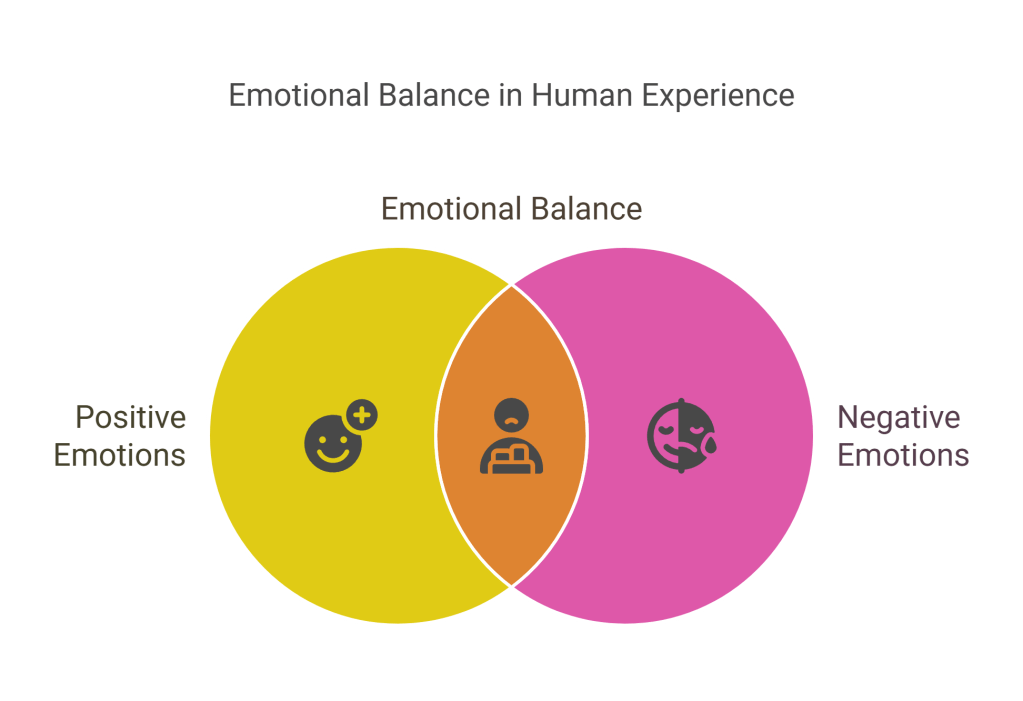
The recognition of emotional complexity challenges popular notions that certain emotions are inherently “positive” or “negative.” Joy without sadness can become shallow; anger without compassion becomes destructive; confidence without vulnerability leads to recklessness. The richness of human experience emerges precisely at these intersections.
Research in affective neuroscience increasingly supports this integrated view. Brain imaging studies reveal that emotional experiences activate multiple neural networks simultaneously rather than discrete emotional “centers.” This biological complexity mirrors the phenomenological complexity of our lived emotional experience.
Emotional development across the lifespan often involves increasing capacity for these complex emotional states. Young children typically experience emotions in relatively undifferentiated ways, while emotional maturity brings greater capacity for nuanced blends. This developmental trajectory suggests that emotional complexity represents an advanced rather than primitive aspect of human experience.
Practical Applications of Emotional Integration
Understanding emotions as integrated blends offers practical benefits across various domains:
In mental health treatment, this perspective shifts focus from eliminating “negative” emotions toward developing more balanced emotional experiences. Therapeutic approaches increasingly focus on integration rather than elimination—helping clients develop productive relationships with all emotions rather than attempting to purge difficult ones.
In education, recognizing emotional complexity can transform approaches to social-emotional learning. Rather than teaching students to “manage” emotions as if they were separate from learning, educators can help students understand how emotional blends like anticipation (anxiety + excitement) or determination (hope + doubt) contribute to learning processes.
In organizational settings, acknowledging emotional complexity can improve leadership and culture. Understanding that innovation requires both confidence and vulnerability, that difficult conversations need both compassion and assertiveness, and that ambitious goals demand both hope and realistic doubt creates more sophisticated approaches to workplace challenges.
In relationships, recognizing emotional blends helps navigate conflicts and transitions. Couples experiencing grief might acknowledge both the continuing love and the pain of loss. Parents supporting children through challenges can honor both the child’s distress and their capacity for growth.
Cultivating Emotional Wisdom
Developing greater comfort with emotional complexity represents a lifelong journey rather than a destination. Several practices can support this development:
Emotional naming that goes beyond basic labels to capture nuance—moving from “I feel bad” to “I’m experiencing anticipation with both excitement about possibilities and anxiety about uncertainties.”
Mindfulness practices that create space to observe emotional complexity without immediate reaction, allowing awareness of how different emotional aspects interact.
Creative expression through arts, writing, or conversation that provides vessels for articulating complex emotional experiences that defy simple categorization.
Cultural exploration that exposes us to diverse emotional concepts and frameworks—from Japanese “mono no aware” to Finnish “sisu” to Arabic “tarab”—expanding our emotional vocabulary beyond English-language limitations.
Interpersonal sharing where we practice articulating complex feelings and witnessing others’, creating communities where emotional sophistication is valued and developed.
Conclusion: Embracing the Both/And of Emotional Life
Our richest emotional experiences—those that feel most meaningful and transformative—often emerge precisely at the intersections of seemingly opposite feelings. By embracing rather than simplifying this complexity, we access deeper emotional wisdom and more nuanced ways of being with our experiences.
As we navigate life’s challenges and opportunities, remembering the dual nature of our emotional landscape can help us find balance. The truth about emotions isn’t that we should eliminate negative ones and maximize positive ones, but that we might discover our greatest strength and insight in the spaces where they meet.
This integrated perspective invites us beyond black-and-white emotional thinking toward a richer palette where joy and sadness, hope and doubt, confidence and vulnerability aren’t opponents but partners in creating a fully human life. When we honor emotions in all their complexity, we don’t just feel more—we feel more wisely.
Discover more from SkillWisor
Subscribe to get the latest posts sent to your email.
 SkillWisor