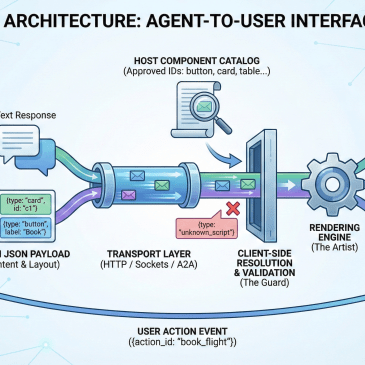
The A2UI Revolution: Agent-to-User Interface

The Agentic Era is here, but are our interfaces ready? Enter Google A2UI (Agent-to-User Interface)—a revolutionary open standard that allows AI agents to break free from text bubbles. Unlike risky HTML generation, A2UI enables agents to ‘speak’ in secure, native UI components, creating dynamic experiences that look and feel like your own app. Dive into the architecture of intent-driven interfaces and learn why A2UI is the missing link between AI reasoning and native rendering. … More The A2UI Revolution: Agent-to-User Interface
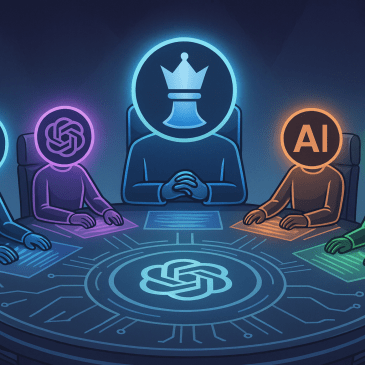
Building an AI Council: A Deep Dive into the llm-council Architecture

The ‘LLM Council’ architecture is making waves as a new standard for AI reliability. Seeing this concept gain traction was a huge moment of validation for me, as I’ve been independently exploring these exact ‘multi-model’ workflows in my own projects. In this post, I discuss why the industry is shifting toward collaborative AI and share how I recently implemented a similar pattern locally using DeepSeek and Gemma … More Building an AI Council: A Deep Dive into the llm-council Architecture

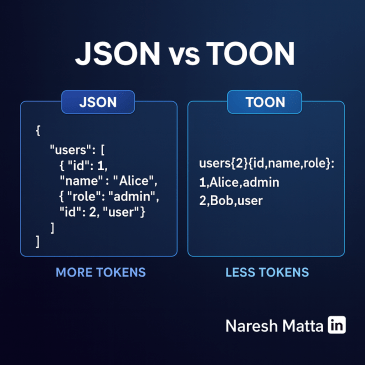
TOON: The AI-First Data Format Revolutionizing Token Efficiency

JSON has powered the web for over two decades — but in the age of AI, its biggest strength has become a costly weakness.

Every brace, quote, and repeated key consumes tokens, and when you’re working with large language models, tokens are literally the currency of computation.

This is where TOON (Token-Oriented Object Notation) steps in. Designed specifically for LLMs, TOON strips away the syntactic noise and delivers the same structured data using dramatically fewer tokens. In this article, I explore why TOON is gaining momentum, how it works, and how you can start using it today to cut API costs, boost performance, and build more efficient AI-powered systems. … More TOON: The AI-First Data Format Revolutionizing Token Efficiency

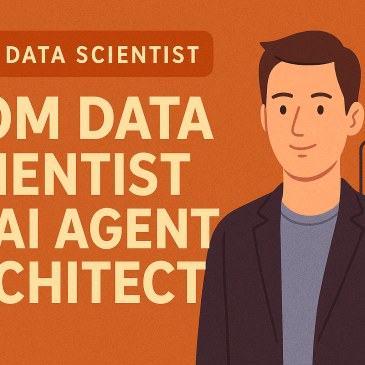
From Data Scientist to AI Agent Architect: A Comprehensive Guide

The AI world is evolving fast—from static models to dynamic, goal-driven agents. If you’re a data scientist, this shift isn’t just a trend—it’s your next career leap. This comprehensive guide breaks down everything you need to make that jump: from core Python, FastAPI, async programming, and Pydantic, to the architecture and mindset behind building real AI Agents.

Ready to go beyond predictions and build proactive, autonomous systems?
Start your transition today—read the full guide and future-proof your AI career. … More From Data Scientist to AI Agent Architect: A Comprehensive Guide

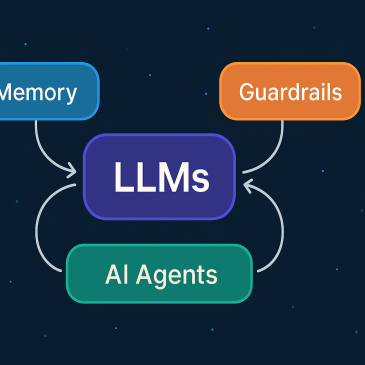
Building Effective LLM-Based AI Agents: Patterns and Best Practices

In the rapidly evolving world of generative AI, building reliable and scalable LLM-based agents is both an art and a science. This blog dives deep into essential patterns like task decomposition, memory handling, tool use, and iterative feedback—laying out proven strategies to help you design effective AI agents that can truly reason, adapt, and perform. Whether you’re just exploring agent design or scaling to production, these best practices will sharpen your edge in the AI race. … More Building Effective LLM-Based AI Agents: Patterns and Best Practices

Supercharge Your YouTube Experience: A Guide to Using Google’s Gemini AI with YouTube Apps

Supercharge Your YouTube Experience: A Guide to Using Gemini AI with YouTube Apps

YouTube offers a massive universe of video content, but navigating it efficiently can feel overwhelming. Enter Gemini, Google’s powerful AI assistant. With Gemini Extensions now integrating with YouTube and YouTube Music, you can dramatically enhance how you watch, learn, and even create content. From summarizing long videos instantly, to extracting structured data, finding hyper-specific recommendations, and even brainstorming ideas for your next YouTube upload — Gemini is transforming the YouTube experience. This guide walks you through practical use cases, how to set up Gemini Extensions, and insider tips to get the most out of this AI-powered synergy. Whether you’re a casual viewer, dedicated learner, or creator, the future of YouTube + AI collaboration starts now. … More Supercharge Your YouTube Experience: A Guide to Using Google’s Gemini AI with YouTube Apps

Vibe Coding: The AI-Driven Revolution Transforming Software Development in 2025

Discover the Future of Programming: Vibe Coding with AI

Vibe coding is revolutionizing software development in 2025! Imagine building apps and tools simply by describing your ideas in plain language-no deep coding knowledge required.

In this article, explore how AI-driven vibe coding is making software creation faster, more accessible, and more creative than ever before. Whether you’re a developer, entrepreneur, or tech enthusiast, learn how vibe coding can supercharge your workflow and bring your ideas to life at the speed of thought. … More Vibe Coding: The AI-Driven Revolution Transforming Software Development in 2025

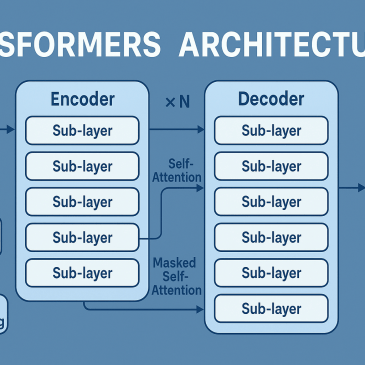
Transformer vs. Mixture of Experts: A Deep Dive into Neural Network Architectures

The Transformer architecture revolutionized AI with its attention mechanism, powering today’s leading language models. But as models grow, the computational cost of their “dense” activation becomes a major hurdle. Enter the Mixture of Experts (MoE), a paradigm shift that enables scaling AI to unprecedented sizes through “sparse” activation and specialized networks.

Curious how MoE is changing the game and stacks up against the classic Transformer? … More Transformer vs. Mixture of Experts: A Deep Dive into Neural Network Architectures

LLMOS: The Future of Intelligent Operating Systems

Table of Contents Introduction: The Dawn of Intelligent Computing {#introduction} The landscape of computing stands at a revolutionary crossroads. The integration of Large Language Models (LLMs) into operating systems, creating what we term Large Language Model Operating Systems (LLMOS), represents perhaps the most significant paradigm shift since the introduction of graphical user interfaces. This transformation … More LLMOS: The Future of Intelligent Operating Systems

Protocol Showdown: MCP vs ACP vs A2A – Differences, Benefits & Orchestration Use Cases

In the rapidly evolving landscape of artificial intelligence, we’re witnessing a transformation comparable to the early days of personal computing. Remember when every device needed a unique connector before USB standardized connectivity? Today’s AI ecosystem faces a similar challenge: how do we enable seamless communication across different AI platforms, models, and architectures? Three groundbreaking protocols—Model … More Protocol Showdown: MCP vs ACP vs A2A – Differences, Benefits & Orchestration Use Cases

The Communication Revolution: How MCP, A2A, and ACP Are Standardizing AI Agent Interactions

As artificial intelligence matures into the backbone of modern enterprise, a fundamental challenge remains: how do we enable AI agents to communicate seamlessly across platforms, organizations, and architectures? Three groundbreaking protocols – Model Context Protocol (MCP), Agent-to-Agent Protocol (A2A), and Agent Communication Protocol (ACP) – are emerging as the solutions to this challenge, each addressing … More The Communication Revolution: How MCP, A2A, and ACP Are Standardizing AI Agent Interactions